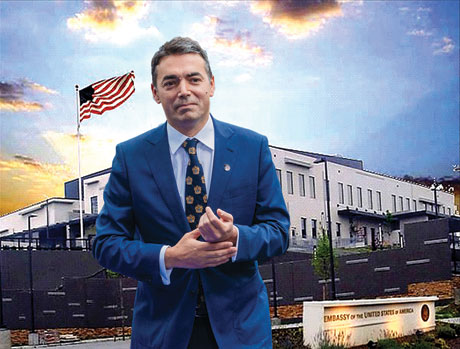
Организацијата Викиликс тврди дека актуелниот шеф на македонската дипломатија Никола Димитров во два наврати бил заштитен извор на амбасадата на САД.
Според организацијата која со години објавува тајни, строго доверливи дипломатски преписки украдени од американските институции, Димитров бил на листата на “заштитени” во 2008 година кога беше преговарач во спорот за името со Грција.
“Сегашниот министер за надворешни работи на Република Македонија, Никола Димитров, се води како „заштитен” извор на американската амбасада два пати во 2008 година, откако на амбасадорот Филип Рикер му пренел информации за грчко-македонскиот спор за името и НАТО и ЕУ интеграциите”, пишува Викиликс.
Амбасадорот Рикер во својите извештаи до Вашингтон во два наврати става забелешка (protect) за информации кои во доверба му ги кажал Димитров. Се работи не за толку важни информации колку што Рикер сака да заштити дека ги добил од Димитров (иако многу информации добивал и од контактите со Црвенковски и Груевски лично).
Ако за Црвенковски и Груевски може да се каже дека морале да “соработуваат” со американскиот амбасадор, гревот на Димитров е во тоа што тој надвор од синџирот на команда имал средби со Рикер.
Во првиот случај Рикер кажува дека министерот Милошоски бил лут што Црвенковски во Њујорк не го зел со себе на средба со Нимиц. Милошоски потоа ја одбил понудата на Нимиц да се сретнат двајцата одвоено (тоа е инфото што Димитров му го кажал во доверба на Рикер, а овој побарал да биде “заштитено”).
Во вториот случај Димитров му кажал на Рикер дека помеѓу претседателот Црвенковски и премиерот Груевски нема консензус во врска со името. Во овој доверлив телекс се гледа дека премиерот Груевски го известувал амбасадорот Рикер за сите теми и дилеми на домашен и на меѓународен план. И примал сугестии.
Еве дел од телеграмите до Вашингтон кои Викиликс ги објави, а во кои се спомнува Димитров:
Classified By: Ambassador Reeker for reasons 1.4 (b) and (d).
Summary
(C) In their first official meeting, PM Gruevski told the Ambassador Sept. 29 that NATO and EU membership remain the GoM’s top strategic priorities, adding that despite their political differences he and President Crvenkovski have a similar strategic view of the name issue with Greece. Gruevski said the four cases recently returned to Macedonia from the ICTY present him with significant challenges, but so far he has managed to handle the crisis with his ethnic Albanian coalition partner, DUI, and does not seek international assistance with these cases. Gruevski also briefed on his proposal to amend the constitution to remove the 50% threshold in the second round of presidential elections. He confirmed the GoM’s plans to recognize Kosovo by mid-October, though the UNGA vote on referring Kosovo’s independence to the ICJ could push the timing a bit earlier. Ambassador emphasized the need to proceed transparently and fairly with the returned ICTY cases, and that recognition of Kosovo would be another important blow against irredentism in the region. The two also touched on Macedonia’s energy situation and other missions’ interest in new embassy projects in Skopje. End summary.
A Way Forward on Name Talks?
(C) On Sept. 29, Ambassador presented credentials to President Crvenkovski, held meetings with PM Gruevski and FonMin Milososki, and spoke by phone with Ali Ahmeti, leader of the largest e-Albanian party, DUI. The meetings with Crvenkovski and Milososki were largely protocolary. DCM and P/E Chief accompanied Ambassador to his meeting with the PM, joined by Gruevski’s Chief of Staff, Martin Protoger. PM Gruevski assured the Ambassador that he and Crvenkovski are reasonably close in their positions on the name negotiations with Greece, asserting that their main difference is on what public stance to present on this issue. He criticized Crvenkovski for being too willing to reveal Macedonia’s bottom line to the press. Gruevski said he is willing to tell us and UN negotiator Nimetz what his bottom line is: preservation of Macedonia’s people and language as “Macedonian,” similar scope of use to what is now used for FYROM (i.e., in international fora, not bilaterally), and a geographic modifier to the name itself only in “brackets” (i.e., parentheses). (He also made a strong plea that the U.S. not change its recognition of Macedonia under its constitutional name.) Should these views be revealed in public, he asserted, Greece will simply pocket these as concessions and use this position as a new starting point. (Subsequent to our meeting, Gruevski and Crvenkovski held dueling press conferences, accusing each other of failing on this issue. The GoM’s name negotiator, Nikola Dimitrov (protect), told us that there is no consensus between Crvenkovski and Gruevski on how to proceed with these talks–more septel.)
(SBU) Gruevski emphasized that Macedonia’s top strategic priorities remain NATO and EU membership. He understood that the European Commission was not likely to recommend offering a date for opening formal membership negotiations to Macedonia, and would likely cite the conduct of June elections and shortcomings in administration and political dialogue as the reasons. However, he added, “the real issue is Greece.”
Returned ICTY Cases: A Major Challenge
(C) Gruevski reported that the four war crimes files recently returned from the ICTY likely present him with the greatest challenge in relations with his coalition partner, DUI, that he will face in his mandate. He reported that the Chief Prosecutor (CP) has confirmed that the 2002 amnesty law does not apply to these cases, and that ICTY Prosecutor Brammertz had also told the CP this. Yet Gruevski understood the serious political risks these cases present to DUI and, by extension, to his coalition. He believed that he and DUI had reached agreement on how to proceed in the near term (i.e., October), but admitted that more challenges lay ahead. Gruevski emphasized that, for now, he was able to work well with the DUI leadership on this issue, and said international assistance with these cases was not now necessary. Ambassador responded that strong leadership requires hard choices. He urged Gruevski to work not to inflame inter-ethnic tensions, and that the proceedings in these cases must be transparent and fair.
Maneuvering on Presidential Election Changes
(C) Gruevski briefed the Ambassador on his proposal to amend the constitution in order to remove the 50% threshold required in the second round on presidential elections. He admitted that in the past the authorities have had to resort to ballot stuffing (without changing the actual winner) in order to reach the threshold, and asserted that unless this rule is changed there is a “95% chance we will have unsuccessful presidential elections next year.” Time is of the essence, he added, since it takes about three and a half months to amend the constitution (presidential elections are due in spring 2009). Ambassador responded that we understood his predicament, and that we do not support DUI’s proposal in recent days to have the parliament elect the president. This would be a step backward for Macedonian democracy.
Kosovo Recognition Coming
(C) Gruevski confirmed that Macedonia still plans to recognize Kosovo in October, along with Montenegro and possibly Portugal (reftel). However, he added, the Serbs have now told the GoM that recognition after the UNGA vote on Serbia’s proposal to take Kosovo’s independence to the ICJ would be a serious blow. He said he would call PM Djukanovic the same day or the following day to ask him to move faster. He reiterated his request that we not discuss this issue publicly prior to GoM action, and his intention to recognize by mid-October, with or without Podgorica…
Energy: No Business as Usual with Russia
(SBU) Ambassador suggested that he and the PM agree to discuss further Macedonia’s energy situation. While we understand Macedonia’s reliance on Russian gas, high-level contact (such as a Gruevski visit to Moscow) would not be advisable given the Georgia situation. Gruevski understood this, noting that the Russian ambassador here told him that the GoR is “always ready” for him to visit Moscow: “They want to use us,” Gruevski opined. The PM added that Macedonia pays a significantly higher price for Russian natural gas than the other countries in the region: 420 Euro/1000 cubic meters, as opposed to 220-300 Euro in Serbia, Bulgaria, Bosnia, and Montenegro. Ambassador inquired as to the status of potential uranium mines in Macedonia (which Gruevski had mentioned when he and the Ambassador met informally in New York over Labor Day weekend). Gruevski replied that these still required exploration. Should this proceed to exploitation, the GoM would need to decide whether to pursue development by a state-owned enterprise or to open it up to private competition.
Chinese interest in New Embassy site
9. (C) Gruevski mentioned that the Chinese Ambassador asked FM Milososki for assistance in acquiring a large (100,000 square meters) piece of land in the Kale area of Skopje, making clear that they have in mind the parcel adjacent to our new embassy, and also noted Russian interest in new construction as well. The Ambassador asked Gruevski to hold off on selling that land to the Chinese until he has a chance to consult with Washington.