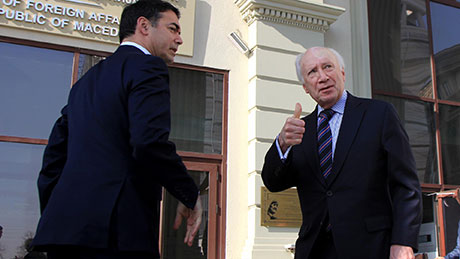
Грчкиот весник „То Вима” ги објави предлозите на посредникот за решавање на спорот за името на Република Македонија меѓу властите во Скопје и Атина.
Нимиц предлага неексклузивност за термините „македонски” и „Македонија” за економска употреба – што значи и двете држави би можеле да ги користат. Во документот се вели дека „името ќе биде во целосна употреба – внатрешна и меѓународна” (или “ерга омнес” по грчки), но откако земјата ќе стане членка на ЕУ. Не постои задолжителен услов за промена на Уставот. Секоја земја во светот сама ќе одлучи како да го напише името на македонски или на англиски јазик.
Ова се предлозите што на 17 јануари во Њујорк им биле предадени на преговарачките тимови од двете земји.
Нимиц бара од двете страни „изрично да потврдат дека немаат територијални претензии една кон друга и да го почитуваат културното наследство”.
Новото име е директно поврзано со конечното пристапување на земјата во ЕУ, што значи дека сегашното уставно име ќе остане до тој момент.
„Во однос на поканата на Македонија за членство во НАТО и до нејзиното пристапување треба да бидат преземени сите неопходни мерки за решавање на билатералните односи со другите земји-членки на основа на новото официјално име кое ќе биде запишано по азбучен ред под буквата “М”, пишува „То Вима”.
Нимиц нуди пет имиња. „Република Горна Македонија”, „Република Северна Македонија”, „Република Вардарска Македонија”, „Република Нова Македонија” и „Република Македонија (Скопје)”. Во исто време меѓународниот посредник ја остава отворена вратата и за други предлози за решавање на спорот.
Во однос на јазикот и националноста Нимиц нуди: или словенската верзија – „makedonski”, или опис врз база на официјалното име или врз база на кратката верзија на името (на пр. државјанин на Република Горна Македонија).
Во врска со преводот на новото име, како од двете инволвирани страни така и од земјите-членки на ОН или трети земји, тие ќе можат да го преведуваат по нивни избор или да го остават непреведено – нешто што Атина го преферира и нешто кое го изјави министерот за надворешни работи, Никос Коѕијас, соопштува весникот.
И покрај тоа, во однос на примената на решението и опсегот на употреба, според „То Вима”, треба да се разгледаат неколку комбинации. Во однос на обемот на користење, Метју Нимиц нуди процес во неколку делови. Прво, усвојувањето на соодветната резолуција за новото официјално име од страна на Советот за безбедност на ОН дека тоа ќе се користи во „сите официјални мултилатерални меѓународни рамки, вклучувајќи состаноци, конвенции, договори и официјални документи.” Потоа Македонија ќе треба да направи сè што зависи од неа, за да може името да се користи во официјалниот систем на ОН и од другите меѓународни организации. Во тој контекст, медијаторот во преговорите прави три забелешки:
„Прво, дека терминот „Македонија” во непроменета или преведена форма нема да биде користен од Скопје како официјално име на државата во која било рамка. Второ, термините „Поранешна Југословенска Република Македонија” и ПЈРМ ќе престанат да се користат во контекст на Скопје. На трето место – и кое изгледа најважно – терминот „Република Македонија” ќе продолжи да се користи за внатрешна употреба до датумот на пристапување во ЕУ”, пишува “То Вима”.
Спроведувањето на решението, според Нимиц, ќе произлезе од комбинацијата на доставувањето извештај на Генералниот секретар на ОН до Советот за безбедност, на резолуција што ќе се усвои по договорот во рамките на Советот за безбедност, ратификација на решението од Генералното собрание на ОН, на билатерален договор меѓу Атина и Скопје, но исто така и со „обврзувачки, веродостојни и неотповикливи национални процедури” од страна на ПЈРМ „вклучувајќи озаконување во Парламентот и извршната власт и доколку се сметаат за потребни и други правно неопходни мерки”, додава грчкиот весник.
Ова е целосниот текст на предлогот на Нимиц од 17 јануари 2018 (според “То Вима”)
Ideas for study / examination by the Parties
(Ideas for Consideration by the Parties)
1.Official Name
„Republika [Modifier] Makedonija”
For example: “Republika Gorna Makedonija” or “Republika Severna Makedonija” or “Republika Vardarska Makedonija” or “Republika Nova Makedonija” or “Republika Makedonija (Skopje)” or any other designation to be agreed upon by the Parties. In this document “Republika Gorna Makedonija” will be used as an example.
The Official Name will be categorized alphabetically under the letter “M”.
2. Short Name
„Gorna Makedonija”
The Short Name will be categorized alphabetically under the letter “M”.
3. Name for Adjective Reference / Nationality (Name for Adjective Reference / Nationality)
Alternative use:
‘Makedonski’ or ‘Republika Gorna Makedonija’ or ‘Gorna Makedonija’.
Examples:
“He is a Macedonian citizen” (He is a Makedonski citizen).
“He is a citizen of Republika Gorna Makedonija” (He is a citizen of the Republic of Gorna Makedonija).
“He is a citizen of Gorna Makedonija” (He is a citizen of Gorna Makedonija).
4. Name for Language
Alternative use:
‘Makedonski’ or ‘the official language of the Republic of Gorna Makedonija’ or ‘the official language of Gorna Makedonija’.
Examples:
The document will be translated into French, German and Makedonski.
The document will be translated into French, German and the official language of Republika Gorna Makedonija.
The document will be translated into French, German and the official language of Gorna Makedonija.
5. Translation
The use referred to in sections 1 to 4 above may be translated by the Parties, other Member States of the United Nations (“Member States”) and third parties, at their option, into any other language, in accordance with the accepted use in that language.
The use referred to in sections 1 to 4 above may be used in unprepared form by the Parties, other Member States and third parties, at their choice.
6. Scope of Use
Subpart 6A
With effect from the adoption by the Security Council of a resolution approving the adoption of the name “Republika Gorna Makedonija” and its ratification by the General Assembly:
a. The use described in sections 1 to 5 above in all formal multilateral international frameworks, including meetings, conventions, agreements and official documents.
b. The Second Part (FYROM) will recommend and make its best efforts to make use of the use described in sections 1 to 5 above in the United Nations system and other multinational organizations.
c. Notes on other forms of the Name:
(i) “Makedonija”, in its unedited or translated form, shall not be used by the Second Party as the official name of the State in any context.
(ii) “former Yugoslav Republic of Macedonia” and “fYROM” will cease to be used as references to Second Party.
(iii) “Republic of Macedonia” (Republika Makedonija) will continue to be used internally, within Second Party, to the extent described in Subpart 6C below.
Subpart 6B
Not later than the date of joining the Second Party to the North Atlantic Treaty Organization, the Second Party will take all necessary steps to conduct its bilateral relations with all member states under the name ‘Republic of Gorna Makedonia’. It is understandable that NATO membership is fully governed by NATO procedures and methods.
Subpart 6C
With effect no later than the date of accession of the Second Party to the European Union, the use described in sections 1 to 5 above will be erga omnes used for all official purposes internally as well as internationally, provided that such use does not need to be used in specific cases where both (i) use is solely internal within the Second Party and (ii) the affected internal activity and its documents are not within the competence of the European Union-economic. It is understood that accession to the European Union is fully governed by the procedures and methods of the European Union.
7. Territorial Claims /
Hostile Statements
The Parties will reaffirm that they renounce all territorial claims and agree not to claim or encourage irrational allegations or hostile statements among themselves.
8. Cultural Heritage
The Parties will reaffirm their respect for patrimony and cultural heritage among themselves.
9. Commercial Use
Separately, Parties will, through official and commercial channels, reach understandings regarding the commercial use of the words Macedonia and Macedonian, which will be applied in all languages on the based on the concept of non-exclusivity and clarity with respect to the country of origin.
10. EU and NATO membership / ISO codes (ISO Codes)
The First Party (Greece) will not disagree with the demands of the Second Party under the name “Republika Gorna Makedonija” for accession to the European Union and NATO according to the respective accession procedures and will actively support the a process of integration and integration of the Second Party into the two organizations. The First Party will support the Second Party in maintaining the appropriate codes for the International Organization for Standardization (ISO) and similar organizations, including “MK” and “MKD”.
11. Implementation
The application will be implemented through:
(i) a report by the Secretary-General of the United Nations to the UN Security Council,
(ii) a resolution to be adopted by the UN Security Council (duly adopted)
(iii) ratification by the General Assembly of the United Nations,
(iv) this bilateral agreement between the two Parties; and
(v) binding, credible and irreversible national procedures by the Second Party, including the adoption of legislation by Parliament and an implementing act and, to the extent deemed necessary, other legally necessary measures.
The Secretary-General of the United Nations and the European Union will play guiding roles in the transition process.